
- Pleasure after spinal cord injury is possible. Sensation and function are not the same thing, and pleasure does not require erection, penetration, or full movement.
- Adaptive positions and tools reduce pressure, spasticity, and fatigue. Side-lying and supported missionary positions, paired with wedge pillows and positioning straps, make intimacy more comfortable and sustainable.
- The whole body can become an erogenous zone. Body mapping, wearable sensation devices, and open communication with your partner help you discover what feels good now.
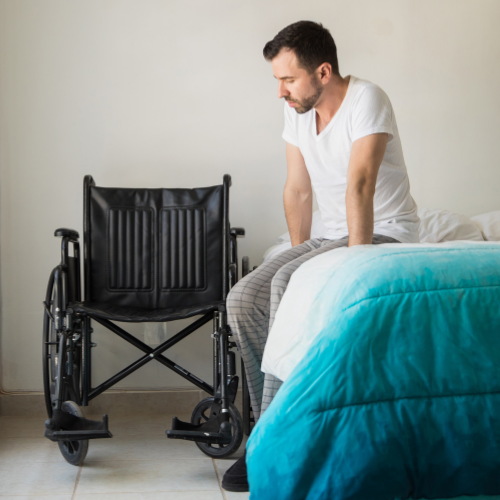
When you're discharged from the hospital after a spinal cord injury (SCI), you'll likely receive a stack of papers about medications, pressure sore prevention, and bowel and bladder management. You probably won't be handed any information about intimacy.
Something so fundamental to being human: touch, connection, and pleasure, are often treated as an afterthought. And, the capacity for intimacy did not vanish the moment your body changed. Your desire for connection hasn't disappeared. Your ability to give and receive pleasure hasn't evaporated. The only thing that has changed is the roadmap to get there.
Whether you're an individual adjusting to life after SCI, a partner learning how to show up in new ways, or a healthcare provider supporting patients through this journey, this blog is for you.
How Does Spinal Cord Injury Change Sensation and Function?
Let's start with something that may surprise you: Sensation and function are not the same thing.
After SCI, you may have experienced changes in both. But here's what we often don't talk about: pleasure doesn't require function. It doesn't require erection or penetration. It doesn't require movement in the way you might think.
What pleasure requires is sensation. And sensation after SCI can be...complicated. But it can also be beautiful and is absolutely worth exploring.
The Sensation Map Has Shifted
For some individuals, sensation below the level of injury may be diminished or absent. For others, it might be altered; touch might feel different than it used to, or areas that weren't particularly sensitive before might become highly responsive.
Some people experience something called “referred sensation,” where touching one area of the body (say, the shoulder) creates a sensation in an area below the level of injury. The nervous system is remarkable like that, it finds new pathways.
Moving Beyond the “Performance” Mindset
Here's a question worth sitting with: If you removed penetration from the equation entirely, what would be left?
The answer, for most people, is a lot. Skin sensitivity. Intimacy. Eye Contact. Breathing together. The way someone's hand feels on your face. The sound of your partner's voice.
This isn't about settling for less. It's about discovering more. It's about a broader definition of what intimacy can be. When we stop measuring sex by performance metrics, we often find it becomes more connected, more present, and frankly, more pleasurable.
What Are the Best Sex Positions After Spinal Cord Injury?

Let's talk logistics when it comes to sex after spinal cord injury and adaptive sex positions for paralysis. Because the reality is that spasticity, limited mobility, pressure concerns, and fatigue can make traditional positions challenging, or in some cases, not possible.
The good news? There are adaptive positions designed specifically to address these challenges. And just as importantly, there are tools that make these positions accessible.
The Challenge: Pressure, Alignment, and Movement
Before we dive into solutions, let's name what you might be working with:
- Pressure concerns: Spending too long in one position can lead to skin breakdown. Pressure sores are very common for those who may be bedridden after injury or surgery. If you have a pressure sore, certain positions may be uncomfortable.
- Spasticity: Involuntary muscle movements that can interrupt intimacy. You may experience random, jerky movements day-to-day, but they can become more frequent or intense when you're aroused.
- Limited Mobility: Difficulty adjusting positions independently. Switching positions mid sex is going to look different now and that's okay.
- Fatigue: Physical exertion that might limit the time or energy available for intimacy. Feeling more tired or as though physical movement is harder is normal with SCI and nothing to be ashamed of.
None of these are character flaws. They're just variables to work with.
Position Solutions
The Side-Lying Position
This position is excellent for reducing spasticity and eliminating pressure points. Both partners lie on their sides, facing each other. It requires minimal movement, allows for plenty of skin contact, and puts no pressure on the tailbone or hips.
A wedge pillowplaced under the receiving partner's top hip can create better alignment and angle for penetration if that's part of your intimacy. For couples where one partner has limited mobility, this positioning keeps both partners comfortable for longer periods.
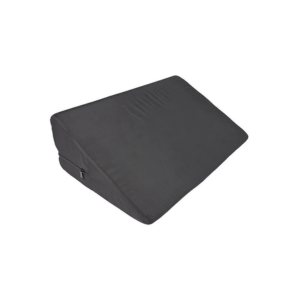
Pivot Positioner Wedge
Supported Missionary
Traditional missionary can be problematic for individuals with SCI due to weight on the body and limited hip movement. But a modified version, where the partner with limited mobility lies on their back with hips elevated, can work beautifully.
Place a wedge pillow under the hips to elevate and angle the pelvis. This takes pressure off the lower back, creates better access, and reduces the work for both partners. The wedge also helps maintain position without requiring either partner to hold it.
Using Positioning Straps for Leverage
For individuals with limited grip strength or core stability, staying connected during movement can be challenging. Positioning strapsaren't just for physical therapy, they're for intimacy too. Wrapped around the partner with limited mobility, these straps give the other partner something to hold onto for leverage and stability. This can be particularly helpful for maintaining pelvic alignment during movement or for helping someone shift positions without a full lift.
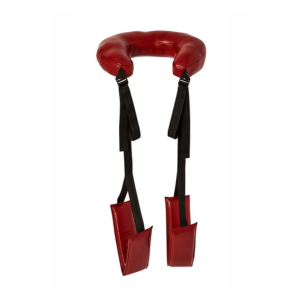
Saffron Thigh Sling
The Bedroom as a Safe Space
Consider your environment. Are there ways to set it up for success? Extra pillows for support? A mattress that's firm enough for stability but soft enough for pressure relief? Removing obstacles that might catch a foot or limit movement? Small adjustments to the space can make intimacy feel more accessible and less like a logistical challenge.
Exploring Sensation: The Whole Body is an Erogenous Zone
Here's where things get interesting. When we stop treating genitals as the “main event,” the rest of the body wakes up.
Expanding the Map
The skin is our largest organ. For individuals with SCI, the areas above the level of injury often become intensely responsive. The brain, seeking pleasure, tunes into these areas with new sensitivity.
- The neck and ears
- The inner arms and wrists
- The chest and nipples
- The mouth and lips
- The scalp during touch or massage
These aren't “second best” options. They're legitimate erogenous zones that deserve exploration.
Introducing Wearable Sensation Devices
This is where wearable sensation devicescan transform your experience. Think of these tools as “sensation translators.” They take vibration and stimulation and deliver it in ways that work with your body.
- For areas with diminished sensation: Stronger vibrations can sometimes penetrate deeper tissue, creating sensation where lighter touch doesn't register.
- For partners: Wearable devices can be worn by either partner, transferring sensation through touch.
- For shared pleasure: Some devices are designed to stimulate both partners simultaneously, creating a feedback loop of sensation.
The goal isn't to “fix” anything. It's to expand your options and give you more tools.
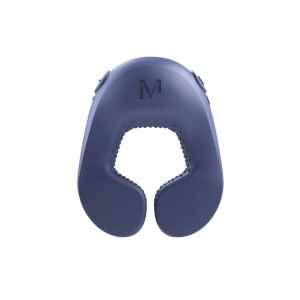
Tenuto Mini
Sensation Exploration Exercise
If you're open to experimentation, try this:
Set aside 20-30 minutes for yourself or with your partner. Remove the expectation of intercourse or orgasm entirely. Take turns exploring each other's bodies (or your own) with touch. Different pressures, different speeds, different textures. Use hands, lips, fabric, a feather, a vibrator. Pay attention to what feels good, what doesn't, and what surprises you.
No goal. No performance. Just sensation.
How Can Partners Talk About Sex After SCI?

If you're the partner of someone with SCI, you might be carrying your own set of fears:
What if I hurt them? What if I do something wrong? What if they don't actually want to be touched but feel obligated? How do we navigate catheters, bowel programs, or medical equipment without it feeling clinical?
These are valid fears. And they're also navigable.
Start the Conversation Outside the Bedroom
The worst time to talk about intimacy is in the middle of it. Find a neutral time, maybe during a walk or morning coffee, to check in.
Simple conversation starters:
- “I've been thinking about how we might reconnect physically. Is that something you'd be open to talking about?”
- “I want to make sure I'm not hurting you or making you uncomfortable. Can you help me understand what feels good now?”
- “I miss touching you. Can we explore what touch looks like for us now?”
Navigating Medical Equipment
Catheters. Bags. Transfer boards. These may be part of your reality. They don't have to be the enemy of intimacy.
Practical tips:
- Empty bags and manage catheters before intimacy, not during.
- Consider positioning that keeps equipment out of the way (wedge pillows can help here).
- If something unexpected happens (a leak, a spasm), laugh about it together. Bodies are unpredictable even without injury. Yours gets to be too.
Intimacy is a Team Sport
This isn't about one person “giving” and the other “receiving.” You're both learning a new language together. Some phrases will feel awkward. Some will be beautiful. You're allowed to stumble.
Redefining the “New Normal”
Here's what we want you to take away from this:
Intimacy after spinal cord injury isn't about recreating what was. It's about discovering what is and what can be.
It requires patience. It requires experimentation. It requires giving yourself permission to explore without pressure, without judgement, without the weight of “should.”
Sometimes, it requires tools. The same way you might use a transfer board to get into bed or adaptive equipment to eat a meal, intimacy products for SCIaren't concessions, they're strategies. They're bridges to the connection you deserve.
Remember: you're not broken. You're navigating change. Pleasure is for everyone. Including you.
FAQ: Sex After Spinal Cord Injury
Can you still have sex after a spinal cord injury?
Yes. Sexual activity and pleasure are realistic expectations no matter the level or completeness of injury. What changes is how your body responds, so experimentation, communication, and the right tools matter more than before.
Can people with spinal cord injuries have orgasms?
Many can. Research suggests orgasm is attainable for roughly 40% to 45% of men and about 50% of women after SCI, and some people experience orgasm through stimulation of sensitive areas outside the genitals. It may feel different than it did before injury.
What are the most comfortable sex positions after SCI?
Side-lying positions reduce pressure points and spasticity, and a supported missionary position with a wedge pillow under the hips takes strain off the lower back. Positioning straps add leverage and stability so neither partner has to hold a position alone.
How do you manage catheters and bowel care during sex?
Empty the bladder or catheter bag beforehand, tape indwelling or suprapubic catheter tubing out of the way, and keep a consistent bowel program. Ask your healthcare provider what is right for your specific equipment.
Is autonomic dysreflexia a risk during sex?
It can be, especially with higher-level injuries. Sexual stimulation can trigger autonomic dysreflexia, so stop and follow your care plan if you notice a pounding headache, flushing, or a sudden rise in blood pressure, and talk with your provider before resuming.
Products Featured in This Article

Disclaimer: This content is for educational purposes only. Intimacy Rehab does not provide medical diagnosis. Always consult your healthcare provider about medical concerns related to your specific condition.
References
- Krassioukov A, Elliott S. Neural Control and Physiology of Sexual Function: Effect of Spinal Cord Injury. Topics in Spinal Cord Injury Rehabilitation. 2017;23(1):1-10.
- Christopher & Dana Reeve Foundation. Sexual Health for Women. Living With Paralysis.
- Christopher & Dana Reeve Foundation. Sexual Health for Men. Living With Paralysis.
Related Articles



Explore Adaptive Intimacy Products
Browse our curated collection of products designed to support comfort, connection, and pleasure for people with spinal cord injuries.
Shop All Products