

- Multiple sclerosis doesn't just affect how people move, feel, or function. It can profoundly affect how they experience intimacy and pleasure. Studies estimate that roughly 40% to 75% of women with MS and about 50% to 75% of men with MS experience sexual changes at some point, whether from nerve damage, symptoms like fatigue and stiffness, or the emotional weight of living with a chronic condition.1, 2
- Sex with fatigue and multiple sclerosis is easier when you plan intimacy around your energy. Choosing your best time of day, setting up your space ahead of time, and opening up what counts as intimacy can protect your energy and your connection.
- A good selection of options can make intimacy with MS feel more comfortable and more possible. Positioning supports carry weight so tired or stiff muscles don't have to, lubrication eases dryness and discomfort, and products for reduced sensation can help arousal feel more reachable when your body responds differently.

Multiple sclerosis (MS) is a chronic condition of the central nervous system that most often begins between the ages of 20 and 40,1 a stage of life when intimacy is often a big part of your day-to-day.
When MS changes how your body moves, feels, and responds, it can also change how you experience closeness. That doesn't mean intimacy has to shrink. For many people, it means getting curious about what works now, and building a few supports around it.
MS and Sex: Why Sexual Changes Happen
Sexual changes in MS are often described in three layers, and understanding them can make the whole topic feel less mysterious.
Primary changes are a direct result of how MS affects the nerve pathways that carry sexual feelings and responses. Depending on your body, this might show up as lower desire, vaginal dryness, erectile difficulties, reduced sensation, or a harder time reaching orgasm.1, 2
Secondary changes are the result of other MS symptoms getting in the way. Fatigue, muscle weakness, spasticity (muscle stiffness and spasms), bladder or bowel concerns, pain, and changes in sensation can all make sex harder, even when desire is there.1, 2 Some medications used to manage MS symptoms, particularly certain antidepressants, can also affect arousal and orgasm.3
Tertiary changes are impacted by the emotional and social side of living with MS: changes in self-image, confidence as a partner, mood, and the relationship itself.1, 2 These often have a bigger impact than people expect, and worrying about sex can feed on itself, which makes it all the more important to name.
It's also worth noting that not every sexual change is caused by MS. Aging, menopause, and other health factors can play a role too, and plenty of people without MS experience things like low desire or dryness.2 Sexual health is also one of the more hidden parts of MS, often underreported and underdiagnosed, so you may need to be the one to bring it up with your doctor.1
Sex With Fatigue and Multiple Sclerosis: Conserving Your Energy

Fatigue is one of the most common and disabling symptoms of MS, and it can shape every part of intimacy.1Treating your energy as something to plan around, not push through, can make a real difference. If you'd like a framework for it, our guide to spoon theory and sex breaks down how to budget your energy for intimacy.
- Notice your best window. Pay attention to when your energy tends to be highest, and plan intimacy for then, instead of whatever is left at the end of a long day.
- Rest and set up first. Put what you need within reach before you begin: pillows, lube, a drink of water, a blanket. Every trip across the room costs energy you may want to save.
- Widen what counts. Intimacy is more than intercourse. Holding hands, cuddling, stroking, and kissing, where the focus is on touch and sensuality, are all meaningful, and some people find re-establishing intimacy more rewarding than chasing a particular outcome.
- Let someone else take the lead. If your partner has more energy that day, they can do more of the moving while you relax into sensation.
- Keep it short and sweet if you need to. A shorter encounter that leaves you feeling good beats a longer one that leaves you depleted.
- Pause without apology. Agreeing on a signal or word for "I need a break" makes it easier to rest without breaking the mood.
Spasticity and Intimacy: Working With Stiffness and Spasms
Spasticity can make certain movements uncomfortable, unpredictable, or hard to hold, and the worry about a spasm mid-moment can be its own source of tension.2 A few approaches can take the edge off:
- Support the parts that tire or tighten. The more your pillows and wedges carry your weight, the less your muscles have to hold, and that can reduce strain and fatigue.
- Move slowly and communicate. Slower changes of position, and an easy way to tell your partner "stop" or "ease up," can help you feel safe and in control.
- Talk to your care team about spasticity itself. Managing other MS symptoms well can reduce their impact on sexual function, so it's worth bringing up with your neurologist or MS nurse.3
Adaptive Positions for MS: Support Instead of Strain

Good positioning isn't about finding one perfect position. It's about reducing the effort your body has to spend, so more of it can go toward pleasure. A few places to start:
- Side-lying. Lying on your side, with a pillow between your knees, takes weight off your legs and hips and asks little of your muscles.
- Supported recline. Leaning back against wedges or pillows lets your body rest while your partner or your hands do the work.
- Seated with support. A stable chair or the edge of the bed, with something firm to lean against, can offer stability without much effort.
- Partner-assisted positioning. Positioning straps and supports can help one partner lift, hold, or guide movement so you aren't holding the position yourself.
If you use a wheelchair, you can also explore ways to adapt intimacy around your existing mobility setup and comfort needs. Wheelchairs and scooters can help some people with MS manage fatigue or weakness and conserve energy, so mobility aids can help you make room for the activities that matter to you, including intimacy.5 Depending on your needs, you may prefer to remain in your wheelchair or explore a supported transfer to another surface. Choose what feels comfortable and safe for your body, and consider asking an occupational therapist or healthcare professional for guidance if transfers or positioning are challenging.
Lightweight, easy-to-move supports can also make a difference, since setting them up costs less energy. Browse the full positioning and stabilization collection for pillows, straps, and supportive furniture designed to take pressure off your body.
The Pivot Positioner Wedge is a good place to begin. Its angled design supports the body in a more comfortable position and relieves pressure on sensitive areas, which makes it a helpful choice when stiffness, weakness, or fatigue make holding a position difficult. The removable cover is machine washable, and the compact size makes it easy to store and bring out when you want it.

If holding your legs in position is tiring, or if stiffness and spasms make it hard to keep them where you want them, the Saffron Thigh Sling Adjustable can do that work for you. It holds your legs in place so you don't need strength or flexibility to stay in position, and soft neck and leg rests add comfort. It also supports deeper angles without the strain, which is helpful for joint pain, mobility limitations, or reduced endurance.

For full-body comfort, the Liberator Lune Snuggle Pillow is a good fit for side-lying positions, which tend to ask the least of tired or stiff muscles. Soft shredded memory foam contours to your neck, shoulders, knees, and back, supporting the hips and spine so you can rest into it instead of holding yourself up. A hidden pocket also fits a small vibrator with ten modes, so stimulation stays in place without you needing to grip or adjust anything, which can matter if MS affects your hands or dexterity.

If you'd rather sit, the Lovebotz Bangin Bench EZ-Ride Sex Stool with Handles gives you a sturdy seat and built-in handles to steady yourself, which takes strain off your legs, hips, and core. It's designed for seated and straddling positions, so you can keep movements shorter and more manageable when fatigue is the limit, and the handles make it easier to adjust your position safely. An included raiser bar fits most suction-based toys, so stimulation doesn't depend on holding anything.

Another option is the IntimateRider Sex Chair, a mobility-focused support device designed to make intimate positioning more comfortable and accessible. It's especially worth exploring for people with spinal cord injuries, arthritis, back pain, or reduced mobility. Its ergonomic design allows controlled, natural movement through upper-body motion, reducing physical strain while increasing range of motion. Designed to support independence and connection without complicated setup, the IntimateRider offers another way to adapt intimacy around your body's needs.

Explore the full positioning and stabilization collection for more options.
Arousal, Dryness, and Reduced Sensation: Tools That Help
When MS affects the nerves involved in sexual response, arousal can take longer, sensation can feel muted or different, and dryness or erectile difficulties can make sex uncomfortable or frustrating.1, 2 Sensory changes are common, and they can affect how arousal and orgasm feel.1 None of this means pleasure is gone. It often means the route to it has changed.
A few ideas:
- Add lubrication. Water-based lubes and moisturizers can ease dryness and discomfort, and they're one of the simplest first steps.1
- Try a stimulating arousal product. Gels and serums that add gentle warming or tingling can help bring attention and blood flow to the area when sensation is lower.
- Consider stronger or different stimulation. For people with reduced sensation, more intense or varied stimulation, such as vibration, can make arousal possible.1
Lubricants, Moisturizers, and Arousal Products
The Wicked Sensual Care Awaken Stimulating Clitoral Gel is a water-based gel that creates a gentle warming and tingling sensation, designed to support sensitivity for people experiencing reduced sensation from hormonal changes, medication side effects, or other factors. You apply a small amount, and it begins working within a minute or two.

The Wicked Sensual Care simply timeless® Stimulating Hybrid Arousal Serum is a hybrid serum made to support responsiveness and hydration together, free of glycerin and propylene glycol. It can be used on its own or alongside other products, which makes it a flexible option if you're building a routine that works for you.

For everyday dryness, the Earthly Body Waterslide Water Based Personal Moisturizer offers a simple, body-friendly glide. It's vegan, odorless, non-staining, and free of silicones, petroleum, parabens, and glycerins, a good fit if you have sensitive skin or prefer a clean, minimal formula.

Easy Toys for Stimulation and Setting the Mood
For stimulation that adapts to your body, the Poco is a compact, bendable finger vibrator designed by clinicians to mimic the feel of fingers. It bends to fit different body shapes, rests easily in your palm, and takes very little effort to hold. Two motors, 12 preset stimulations, and 16 intensities, controlled through an app, give you room to find what registers when sensation is lower. It's also quiet and water resistant, so it's easy to use solo or with a partner.

Another easy, low-effort option is the Wellness Palm Sense Rechargeable Silicone Massager. An ergonomic finger fin slips between your fingers for a secure grip, so you don't have to squeeze to hold it. It has ten vibration functions, runs up to 80 minutes on a charge, and is fully waterproof, which makes it a simple way to set the mood in the bath or shower too.

Explore the full lubrication collection and the reduced sensation collection for more options, including easy-to-use toys that help set the mood.
Erectile Dysfunction and MS
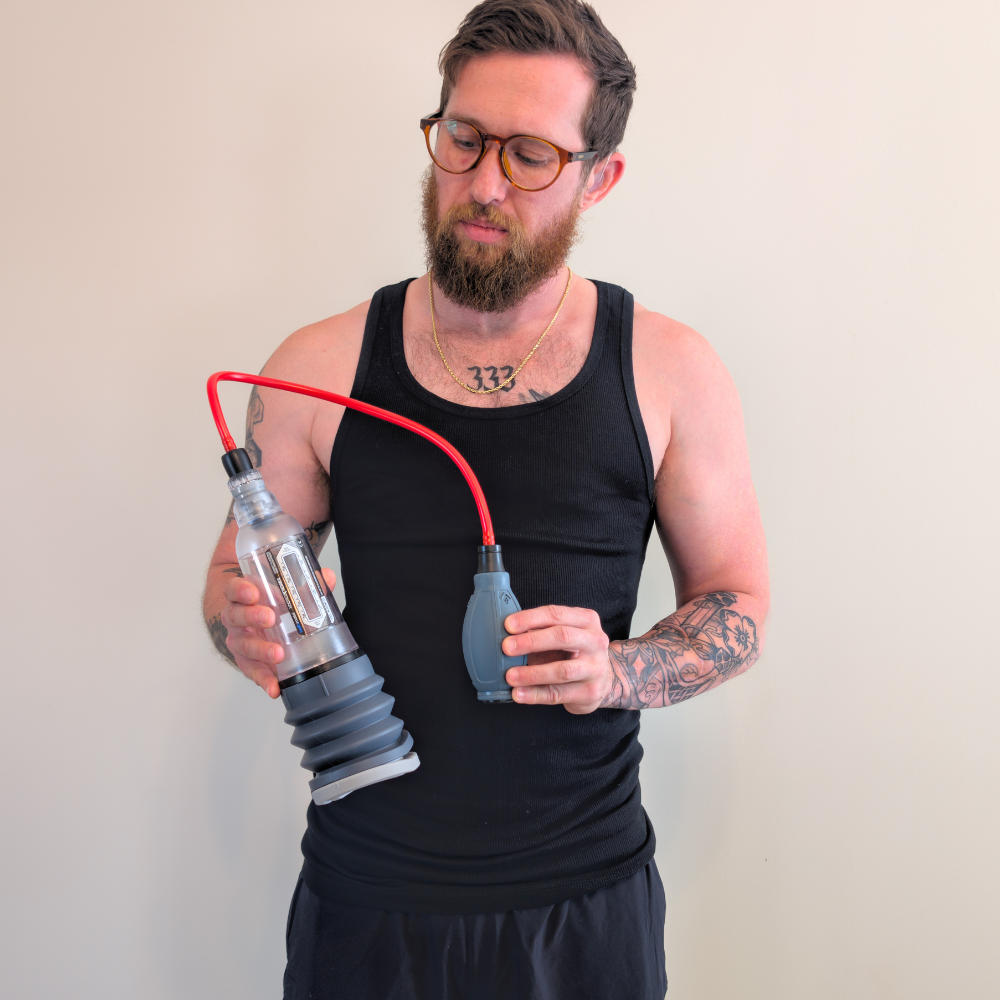
Erectile difficulties are among the most common sexual changes for men with MS, reported by roughly half to three-quarters of them.1They can stem from nerve changes, but fatigue, medications, and stress can worsen them, so it's worth discussing with your doctor. Medication is often the first approach, and other options, such as penis pumps, exist if it isn't the right fit.
If you'd like to explore that route, the Hydroxtreme line of water-based pumps uses warm water instead of air, which is designed to feel more comfortable than traditional pumps, and a detachable handball lets you adjust pressure precisely. They come in three sizes, so you can choose the fit that suits your body: the Hydroxtreme5, Hydroxtreme7, and Hydroxtreme9. Check the sizing details on each product page, and ask your doctor whether a pump makes sense for you before you begin.
Reduced Sensation? Try Body Mapping

If your body responds differently than it used to, one of the most useful tools is simply rediscovering it. Sex therapists often suggest a technique called body mapping, which you can do on your own or with a partner.2
In short, you set aside 15 to 20 minutes somewhere private and comfortable, then explore your body from head to toe, noticing where touch feels pleasurable, uncomfortable, or neutral. Many people jot notes on a simple body outline, using a rating scale or a color code like red, yellow, and green. Pay attention to pressure, speed, rhythm, temperature, and what's touching you, whether that's fingers, a soft brush, or a vibrating toy.2
The goal isn't orgasm, and it's usually recommended not to aim for one at first, since that can defeat the purpose. It's worth repeating the exercise now and then, because your preferences may shift with your symptoms, your medications, and even your mood.2
Talking About It: Partners and Providers
The most important starting point for managing sexual changes is being willing to talk about them. That can feel awkward, with a partner and with a doctor alike, but sexual problems can be symptoms of MS and they deserve to be taken seriously. MS nurses, GPs, and other healthcare professionals are often used to these conversations, and if you aren't getting the support you need, you can ask for a referral to someone with more experience.2If you'd like help preparing, our guide on how to talk to your doctor about sexual wellbeing offers a script to start from.
It's also worth asking your prescriber whether any medications could be affecting desire or arousal, without stopping anything on your own.3 And for partners, counseling can help too. In one small study, couples who worked with a counselor reported better communication and greater sexual satisfaction.1
Intimacy With MS, at Your Own Pace

MS can change a lot about how your body works, but it doesn't take away your right to closeness, pleasure, or desire. Some days will take more planning than others. Some days you might want to skip sex altogether and just be close. All of that is part of finding what works for you now.
Start where it feels easiest. Plan around your energy, set up your space, lean on supports that carry some of the weight, and talk about what you're noticing. The rest tends to follow, one step at a time.
FAQ: MS and Sex
Can you still have sex with MS?
Yes. Many people with MS have satisfying sex lives, though they may need to adapt to changes in energy, sensation, or movement. Talking openly with your partner and your care team, and trying new approaches, can help.
How does MS fatigue affect sex?
Fatigue can lower desire, reduce stamina, and make physical effort feel overwhelming. Planning intimacy for your best time of day, choosing lower-energy activities, and using supports that reduce effort can help you stay connected without depleting yourself.
What are the best adaptive positions for MS?
Side-lying, supported reclining, and supported seated positions can reduce the effort required from tired or stiff muscles, especially when pillows or wedges help carry your weight. If you use a wheelchair, you can also explore ways to adapt intimacy around your mobility setup and comfort needs. Supportive products like the Pivot Positioner Wedge and IntimateRider Sex Chair may help with positioning. The best approach depends on your symptoms, mobility, and comfort that day.
Can MS medications affect sex drive?
Some medications used to manage MS symptoms, particularly certain antidepressants, can affect arousal and orgasm. If you notice a change, talk with your prescriber rather than stopping anything on your own.
What can help with dryness or reduced sensation from MS?
Lubes and moisturizers can ease dryness, and arousal gels or serums may support sensitivity. If erectile difficulties are part of the picture, your doctor can walk you through medication and device options. Browse our lubrication collection and reduced sensation collection for options, and talk with your care team about other approaches.
Products Featured in This Article


Scroll to see more products →
Disclaimer: This content is for educational purposes only. Intimacy Rehab does not provide medical diagnosis. Always consult your healthcare provider about medical concerns related to your specific condition.
References
- Guo, Z.-N., He, S.-Y., Zhang, H.-L., Wu, J., & Yang, Y. Multiple Sclerosis and Sexual Dysfunction. Asian Journal of Andrology. 2012.
- Sexual Problems for Women With MS. MS Trust. 2018.
- Sexual Problems. National Multiple Sclerosis Society.
- What Is MS? National Multiple Sclerosis Society.
- Wheelchairs and Scooters. MS Society. Last full review: January 1, 2024.
Continue Reading
Related Guides
More From the Blog


Explore Adaptive Intimacy Products
Browse our curated collection of positioning aids, lubricants, and easy-to-use tools designed to make intimacy with MS more comfortable and accessible for your body.
Shop All Products