
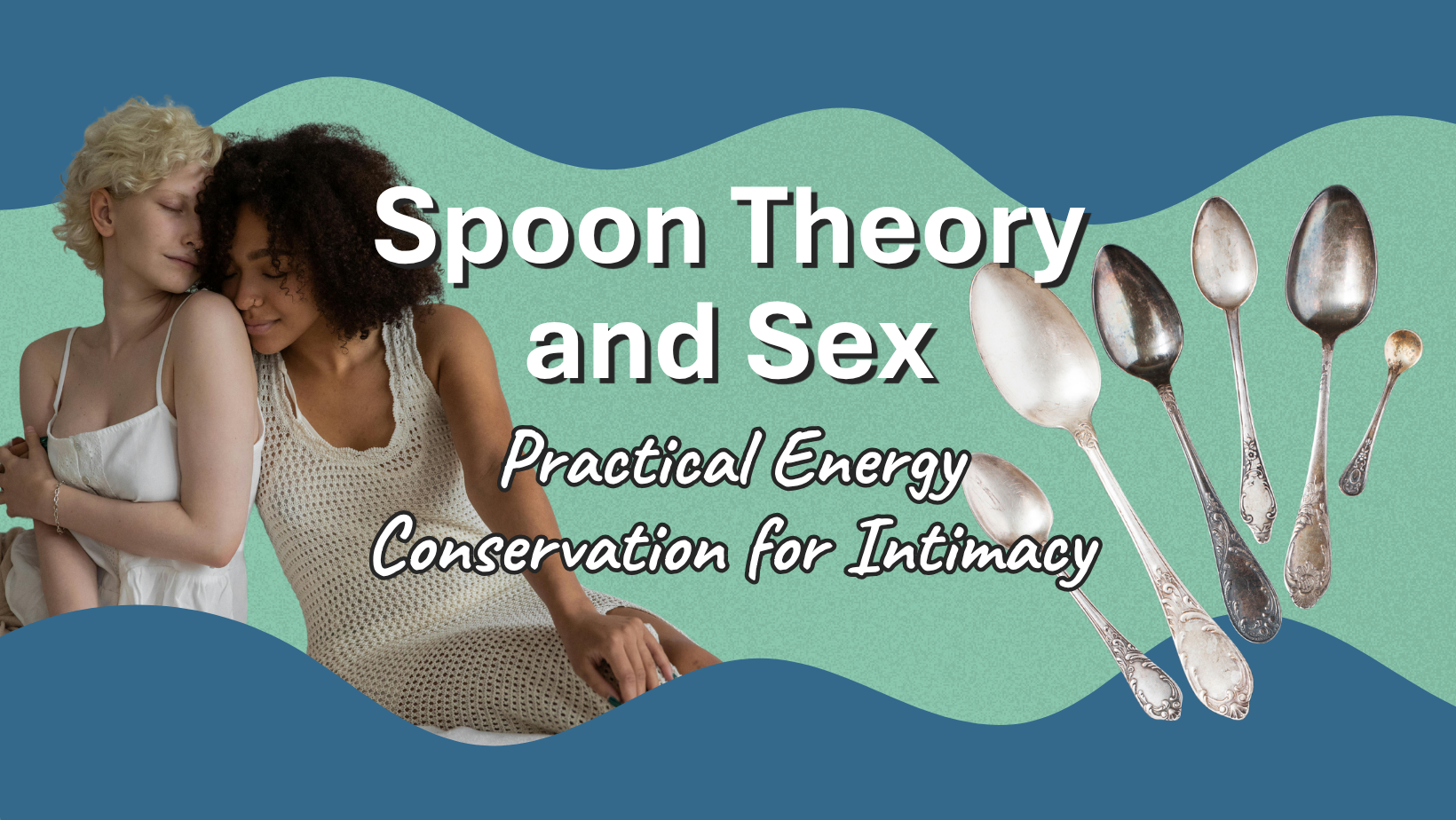
- Planning for intimacy is both practical and considerate. Spoon theory is a metaphor that treats your daily energy as a limited supply of spoons, with every task costing one. Setting aside spoons for connection protects intimacy without sacrificing spontaneity.
- Low energy intimacy has a lot of room in it. Slow touch, oral sex, toy play, and other less strenuous activities can be deeply satisfying, and they cost fewer spoons than people assume.
- Energy conservation and sex work best when your equipment does some of the work. Positioning aids, supportive pillows, and hands-free tools shift effort away from your body so more of your energy can go toward connection and pleasure.

Chronic illness, chronic pain, neurodivergence, and even exhaustion all have something in common: energy is finite, and most of us only find out how finite when we try to spend it on something we care about. If intimacy has started to feel like one more thing you can't afford, you are not alone.
Chronic fatigue and sex can feel like opposing forces, but they don't have to be. Spoon theory, a simple metaphor for limited energy, gives you a way to talk about low energy intimacy without shame, and to plan for connection instead of hoping you'll have enough left at the end of the day. It also treats sex as an ordinary part of managing your energy, the same way you'd plan for any other task that matters to you.
That idea is captured in "Spooning and Forking," an artwork by Michaella M. from Dr. George Turner's Cripping Sexuality Gallery: two spoons of different sizes lying in a bed, not touching, yet. Michaella chose spoons because they are "an everyday thing that no one questions or thinks twice about," and she believes everyone should bring that attitude to the intersection of disability and sex. She also points out that physical touch can sometimes feel daunting or overwhelming, which is why she sees talking about your needs and desires before touching as essential to a safe, enjoyable sexual interaction.5
What Is Spoon Theory?
Spoon theory is a metaphor created by Christine Miserandino, a writer living with lupus, to explain what life with limited energy feels like.2 In her telling, each spoon is a unit of energy. Every task, from getting out of bed to taking a shower, costs a spoon, and once the spoons are gone, there is no reserve tank.2 That's why "just push through" doesn't work for so many people.
The idea began in the chronic illness community, and it has since been embraced by many neurodivergent adults, who often find it describes their days almost exactly. The costs just come from different places. Sensory overload, masking, executive function demands, and regulating emotions can all drain spoons that other people never have to count.4 Whether your spoons run low because of pain, fatigue, or an overloaded nervous system, the math is the same, and so is the need for a shared language to talk about it.
Spoon Theory and Sex: Why Intimacy Costs Spoons
Sex can take anywhere from almost no physical effort to a great deal, and for people with limited energy or chronic pain, keeping up with the physical demands can be frustrating. Many people end up avoiding sex altogether, not because they don't want connection, but because they're anxious about overdoing it or crashing afterward.1
It also takes a mental and sensory toll. Being present, managing sensation, communicating, and regulating emotions all take energy, and intimacy is often one of the first things to go when the spoons run out.4 If you've been pulling back from sex lately, that doesn't mean your desire is gone. It may simply mean the cost exceeds your budget.
Low Energy Intimacy: Strategies That Save Spoons
Energy conservation and sex are a good match. Here are a few approaches that can help you stay connected without emptying the drawer, roughly in the order you'll use them.
Plan Ahead
If your energy is best in the morning, plan for the morning. If you notice a regular bump in energy, say after a restful weekend, that might be your best window.3 Planning isn't unromantic. It's a way of making sure you actually get to be there.2
Set Up Your Space First
Before anyone gets cozy, put what you'll need within reach: lube, pillows, toys, a glass of water, a blanket. Every trip across the room or search through a drawer is a spoon you don't get back. Easing sensory demands helps too, whether that means softer lighting, a quieter room, or a temperature that keeps you comfortable.
Choose Less Strenuous Activities
Fingering, sex toy play, and oral sex typically take less energy than penetrative sex. Try building a shared "sexual menu" with your partner so there are plenty of options for low-spoon days.1

Adapt the Position, Not the Pleasure
Giving oral sex while lying down with your head on a pillow, instead of kneeling or being on all fours, is a small change that saves real energy.1 Supportive wedges and pillows can take over the work of holding a position, and hands-free and low-effort toys can handle stimulation for you.
Slow Down on Purpose
A slow, gentle touch can be just as teasing and exciting as something intense, and it asks far less of your body. Try touching close to a sensitive area, then pulling back, then returning, and let anticipation do some of the work.1
Know Your Comfort Threshold
Pay attention to when your breathing shifts from easy to heavy, and ease off before you hit your limit. Staying in a range that feels manageable helps you enjoy yourself and builds confidence for next time.1
Build in Pauses and Share the Lead
Stopping to rest, switch positions, or simply cuddle isn't a failure; it's pacing. Agree on a word or signal beforehand so either of you can call a break without a big conversation, and let the partner with more spoons that day take the more active role.4
Let Go of the Finish Line
Pleasure doesn't have to end in a particular way to count. A few minutes of touch, a shared bath, or falling asleep close together can be a satisfying encounter, and dropping a set goal takes a lot of pressure off. If this shift feels new, our guide to redefining sex and intimacy after a diagnosis goes deeper on moving toward pleasure-focused connection.
Plan Your Recovery
Treat rest as part of the plan instead of something to negotiate afterward. Decide ahead of time what kind of recovery you'll likely need and for how long.
Talking About Spoons With Your Partner(s)

One of the most useful things about spoon theory is that it gives couples a short, low-pressure way to talk about energy. Saying you're out of spoons tells your partner you have a capacity issue, not a willingness issue, and that difference matters.4 It also removes the burden of proving or justifying how you feel.
A few ways to bring it into your relationship:
- Check in. Ask, "How many spoons do you have today?" before making plans, including intimate ones, to avoid misreading. Even small joint decisions, like choosing dinner, use spoons we forget to count.
- Track your patterns. A calendar or app can show when your energy tends to return, so you and your partner can plan around it.3
- Share the load unevenly, without keeping score. Partners rarely have the same number of spoons, and the cost of the same task can be very different for each person. Support that follows actual capacity, rather than a fixed 50/50 split, tends to feel more sustainable.4
- Check on your partner's spoons too. Partners run low as well, and feeling seen goes a long way toward making the whole system work.
Telling someone you're low on spoons is also a gentle, honest way to set a boundary without needing to explain every detail of your health or your brain.
Energy Conservation and Sex: Let Your Equipment Do the Work
None of the tools below are fixes. They're energy-saving tools, designed to move the physical effort of intimacy away from your muscles and joints and into the equipment, so the spoons you do have can go toward what you actually want to feel.
Positioning Support for Low Energy Intimacy
The Liberator Lune Snuggle Pillow puts comfort first. Soft shredded memory foam contours to your neck, shoulders, knees, and back to reduce pressure, so you can rest into support instead of holding yourself up. A hidden pocket also fits a small vibrator, which gives you stimulation without needing to grip or adjust anything.

The Pivot Positioner Wedge has an angled design that supports the body in a more comfortable position and relieves pressure on sensitive areas. It's a helpful choice for chronic pain, post-surgery recovery, or menopause, and the removable cover is machine washable, which is one less chore to spend a spoon on.

If you'd rather sit than recline, the Lovebotz Bangin Bench EZ-Ride Sex Stool with Handles gives you a sturdy seat and built-in handles to steady yourself, which takes strain off your legs, hips, and core. It's designed for seated and straddling positions, so you can keep movements shorter and more manageable, a real advantage when stamina or fatigue is the limiting factor. The handles also make it easier to adjust your position safely, and an included raiser bar fits most suction-based toys so stimulation doesn't depend on holding anything.

If keeping your legs lifted wears you out, the Saffron Thigh Sling Adjustable holds your legs in place so you don't need flexibility or strength to stay in position. Soft neck and leg rests add comfort, and it supports deeper angles without the strain, which is useful for joint pain, mobility limitations, or reduced endurance.

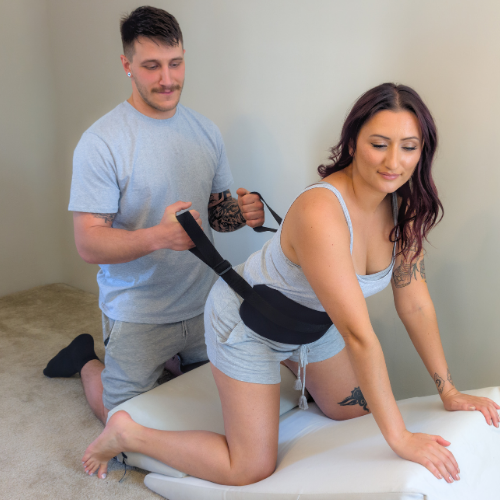
For partner-assisted positioning, the Bedroom Bliss Lover's Position Strap lets one partner help with lifting, holding, or guiding movement, shifting the workload into the strap instead of onto joints and muscles. It can be used in standing, seated, or reclined positions, and it's a thoughtful option for people with arthritis or reduced grip strength who still want to feel connected.

Browse the full positioning and stabilization collection and the comfort and pain reduction collection for more ways to support your body.
Hands-Free and Low-Effort Stimulation
Holding a toy, keeping steady pressure, and adjusting settings all cost spoons. Hands-free tools take those jobs off your plate.
The Bedroom Bliss Lover's Grinder stays put with a suction cup base, and a wireless remote lets you or a partner adjust things from wherever you're comfortable. You can settle into a low-effort position and let the stimulation come to you.

The Liberator Wanda Hands-Free Wand Mount holds a wand securely in place so you can grind, recline, or shift your body without needing to hold or adjust the toy. That removes the need for grip strength and lets you stay in a comfortable position, solo or with a partner. (The wand is sold separately.)

On days when you'd like to hold a toy but want it to take as little effort as possible, the Wellness Palm Sense Rechargeable Silicone Massager has an ergonomic finger fin that slips between your fingers for a secure, easy grip. It has ten vibration functions, runs up to 80 minutes on a charge, and is fully waterproof, so it works in the bath or shower too.

Explore the full hands-free and low-effort collection for more options.
Leave a Spoon for Dessert

Living with limited energy doesn't mean giving up on intimacy. It means treating your energy as something worth protecting, and choosing, on purpose, where you want to spend it.
Plan around your energy. Talk openly about your spoons. Choose lower-effort activities and tools that carry some of the weight. Most of all, give yourself permission to go at your own pace. Intimacy doesn't have to happen on anyone else's timeline, and it never has to cost everything you have.
As Michaella M. writes in her artist statement, the goal is to look after your mind and body so there's still a spoon left at the end of a long day.5 Your connection, your pleasure, and your rest all deserve a place in the budget.
FAQ: Spoon Theory, Sex, and Low Energy Intimacy
What is spoon theory, and how does it relate to sex?
Spoon theory is a metaphor for limited daily energy, where each task costs a spoon. Sex and intimacy use physical and mental energy too, so thinking in spoons can help you plan for intimacy, pace yourself, and talk to a partner about what you have to give that day.
What helps with chronic fatigue and sex?
Start with lower-energy activities like slow touch, oral sex, or toy play, plan intimacy for the time of day when your energy is best, and use positioning support so you're not working to hold a position. If you have questions about what's safe for your body, ask your healthcare provider.
Is spoon theory only for people with chronic illness?
No. It began in the chronic illness community, but many neurodivergent people use it too, since sensory load, masking, and executive function demands also use up energy that others may not have to track.
How do I tell my partner I'm out of spoons without it feeling like rejection?
Using "spoons" as shared shorthand can help, because it signals a capacity issue, not a lack of desire. It also helps to offer something you do have the energy for, like cuddling, kissing, or simply being close.
What products help save energy during sex?
Positioning wedges, supportive pillows, thigh slings, and hands-free mounts all move effort from your body to the equipment. Browse our comfort and pain reduction collection to find options that fit your body and your energy.
Products Featured in This Article
Scroll to see more products →
Disclaimer: This content is for educational purposes only. Intimacy Rehab does not provide medical diagnosis. Always consult your healthcare provider about medical concerns related to your specific condition.
References
- Ellis, K. Energy Conservation Strategies for Sex: How to Keep More Spoons. Springrose. 2024.
- Spoon Theory: A New Way to Think About Your Daily Energy. National Center on Health, Physical Activity and Disability (NCHPAD). 2025.
- Norton, J. 6 Ways to Use the Spoon Theory to Improve Communication in Your Relationship. Bezzy Psoriatic Arthritis. 2023.
- Lazarony, B. Spoon Theory for Couples: Energy Accounting in Neurodiverse Relationships. Love on the Autism Spectrum. 2026.
- Michaella M. Spooning and Forking. Cripping Sexuality Gallery 2022-2023, Dr. George Turner.
Related Articles



Explore Energy-Saving Intimacy Products
Browse our curated collection of positioning aids, supportive pillows, and hands-free tools designed to save your spoons for connection and pleasure.
Shop All Products