
- Communication matters. Talking about comfort, movement, pain, positioning, and what feels good can take pressure off both partners.
- Support can make a big difference. Positioning straps, firm pillows, wedges, and supportive furniture can help stabilize the body and reduce the muscular effort needed to maintain a position.
- Spasticity doesn't mean intimacy is off the table. Timing, pacing, supportive positioning, and guidance from your healthcare or rehabilitation team can help you work with changes in muscle tone.
- Sex doesn't have to mean intercourse. Touch, massage, oral sex, mutual stimulation, toys, and other forms of pleasure can be equally meaningful.
- Adaptation isn't a compromise. It's about creating an intimate experience around what feels comfortable and pleasurable for your body.
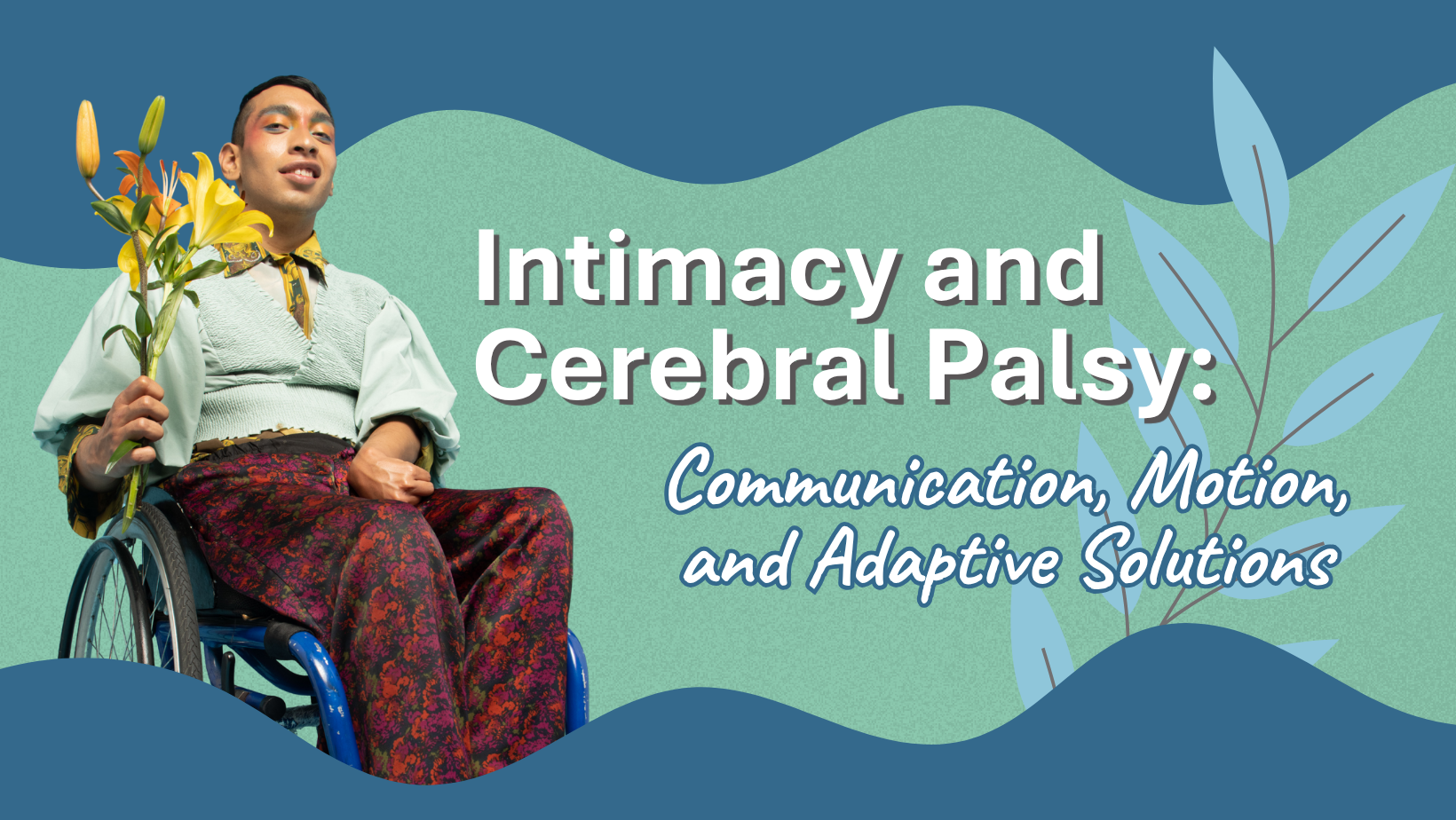
Cerebral palsy can affect movement, muscle tone, coordination, balance, and mobility, but it doesn't take away the desire or ability to experience intimacy, pleasure, and connection. Sex with cerebral palsy may simply require a different approach to positioning, communication, pacing, and support.
There is no single way that cerebral palsy affects intimacy. One person may experience significant spasticity or limited mobility, while another may have relatively few physical barriers. Fatigue, pain, muscle spasms, positioning difficulty, and range of motion can all play a role, and those needs can even change from one day to the next.1
The goal isn't to force your body into a conventional sexual position. It's to find ways of being intimate that work with your body.
Cerebral Palsy and Intimacy: Start With Communication
Good communication is important in any sexual relationship, but when movement or muscle tone can change unexpectedly, it becomes even more valuable.2
Talk about what movements are comfortable before you're in the middle of intimacy. If one partner needs help moving a leg, shifting their hips, transferring onto a bed, or changing positions, discuss how they want that assistance provided.
Simple check-ins like, "Is this position still comfortable?" or "Do you want more support here?" can make intimacy feel collaborative rather than clinical.
Communication can also include nonverbal cues. If speech is difficult or takes extra effort, partners can establish signals for yes, no, slow down, stop, or reposition before intimacy begins.
Most importantly, the person with CP should remain in control of how their body is touched, moved, or supported.
Spasticity and Sex

Spasticity is involuntary muscle tightness or spasms associated with neurological conditions, including cerebral palsy. During sex, it can make certain positions harder to enter or maintain, and muscles may tighten in response to movement, excitement, fatigue, or stimulation.3
Instead of fighting against spasticity, try planning around it.
Some people find intimacy easier at times of day when their muscles are naturally more relaxed or when fatigue is lower. A warm shower, gentle massage, or unhurried touch beforehand may also help the body settle into the experience.

Move between positions slowly and give muscles time to adjust. If a position creates significant tension or triggers repeated spasms, that's useful information from your body. Change the angle, add support, or try something else rather than pushing through discomfort.
If spasticity regularly interferes with intimacy, consider talking with your physician, physical therapist, or occupational therapist. They may be able to help identify comfortable movement patterns or positioning strategies based on your specific body.
Adaptive Positions for Limited Mobility
The most useful sexual position isn't necessarily the most adventurous one. It's the one that allows you to relax enough to enjoy yourself.
Side-lying positions can work well for some people because the bed supports much of the body's weight and neither partner has to maintain as much balance. Reclined positions can also provide stability when the back, hips, and legs are properly supported.
Using a wheelchair doesn't mean intimacy has to be limited to a bed or traditional positions. Depending on the person's chair, mobility, comfort, and transfer needs, seated intimacy or touch may be more accessible.3
The key is to look at what the position is asking your body to do. If you're using most of your energy to balance, hold your legs apart, support your torso, or keep your hips elevated, adding external support may make that same position significantly easier.
Positioning and Stabilization Support
Regular bed pillows can provide some hip support during intimacy, but they may flatten or slide out of position, making it difficult to maintain comfortable positioning. Firmer positioning aids are designed to hold their shape and take some of that work away from your muscles.4
A Liberator Wedge Sex Pillow beneath the hips can change the angle of the pelvis without requiring someone to actively lift or hold their body. A firm pillow behind the back can provide additional stability in a side-lying or reclined position. Support beneath the knees or legs can help when maintaining a particular leg position is tiring or uncomfortable.

The Liberator Lune Snuggle Pillow offers curved cushioning that can provide additional comfort and support during side-lying positions, helping make intimacy more comfortable and accessible. It can be used to help support the body in reclined or side-lying positions, providing another option for individuals who benefit from extra stability and comfort.

Positioning straps like the IntimateRider Chair Positioning Strap can provide additional stability for people who need support maintaining leg or body positioning during intimacy. By helping keep the body comfortably supported, these straps can reduce the physical effort required from both partners, allowing them to focus less on maintaining positions and more on enjoying their time together.

Adjustable or supportive furniture like the Liberator Aria Convertible Chaise and Bench can also be useful when getting into and out of positions is the biggest barrier. A stable surface at the right height or angle may reduce difficult transfers and allow partners to spend less time managing positioning and more time connecting.

Start with the problem you're trying to solve, whether that's balance, hip positioning, leg support, fatigue, or range of motion, and choose support around that need.
Hands-Free Options Can Reduce Physical Effort
Limited hand function, coordination differences, fatigue, or involuntary movement can make holding a toy difficult. Hands-free and mounted products can remove some of that physical work.
A toy mount like the Pivot Convertible Toy Mount can stabilize a favorite vibrator or other compatible product so it doesn't have to be continuously gripped or repositioned. Remote-controlled toys may also allow either partner to adjust intensity without requiring precise hand movements.

This can be especially helpful when someone wants to conserve their energy or when maintaining a position already requires concentration.
Adaptive intimacy is less about finding a specific "disability product" and more about asking:
What physical task is making pleasure harder, and is there a way to remove that task?
Intimacy Is Bigger Than Penetration

When penetrative sex is difficult, it's easy to feel as though something important has been lost. But intimacy has never been limited to intercourse.
Touching, kissing, massage, oral sex, mutual stimulation, sensual touch, toys, and simply being physically close can all be part of a satisfying sex life.
Taking penetration off the agenda can create more freedom to discover what actually feels good. This can be particularly valuable when fatigue, pain, mobility, or spasticity varies from day to day.
There doesn't have to be one "right" way to have sex with cerebral palsy. What works today may look different next week, and that's okay.
Bring Sexual Health Into Your Healthcare Conversations
Sexual wellbeing deserves to be part of healthcare and rehabilitation conversations. If pain, muscle spasms, positioning, medication side effects, pelvic floor concerns, erections, lubrication, or another physical issue is interfering with intimacy, bring it up with your healthcare provider.
A physical therapist or occupational therapist may also be able to help with positioning, transfers, range of motion, fatigue management, or adaptive equipment.1
You don't need to provide every intimate detail to ask for help. You can simply say, "I'd like help finding comfortable positioning for sexual activity," or, "My spasticity is interfering with intimacy. What can we do to manage it?"
Your sex life is part of your quality of life, and it's a valid part of the conversation.
FAQ: Intimacy and Cerebral Palsy
Can people with cerebral palsy have sex?
Yes. Cerebral palsy affects people differently, and many people with CP have fulfilling sexual and romantic relationships. Mobility, spasticity, pain, fatigue, or positioning may require adaptations, but CP itself does not eliminate sexuality or the capacity for intimacy.
What positions are easier for sex with cerebral palsy?
It depends on the person's mobility and muscle tone. Side-lying and supported reclined positions can reduce the need for balance and muscular effort. Pillows, wedges, positioning straps, and supportive furniture can also help the body remain comfortably supported.
How can spasticity affect sex?
Spasticity can cause muscle tightness or involuntary spasms that make movement or positioning more difficult. Moving slowly, using supportive positioning, choosing times when the body is less fatigued, and talking with a healthcare or rehabilitation provider about spasticity management may help.
What adaptive products can help with CP and intimacy?
Positioning pillows, wedges, stabilization straps, supportive furniture, hands-free toys, toy mounts, and remote-controlled products can reduce physical effort and make pleasure more accessible. The right option depends on the specific movement or positioning challenge you're trying to address.
Should I talk to my doctor or therapist about sex and cerebral palsy?
Yes. Sexual wellbeing is part of overall health. Physicians, physical therapists, occupational therapists, and other rehabilitation professionals can help address issues such as spasticity, pain, positioning, range of motion, fatigue, transfers, and other concerns that may affect intimacy.
Products Featured in This Article


Disclaimer: This content is for educational purposes only. Intimacy Rehab does not provide medical diagnosis. Always consult your healthcare provider about medical concerns related to your specific condition.
References
- Choi, E.K., et al. Exploring the Sexual Experiences and Challenges of Individuals With Cerebral Palsy. Journal of Pediatric Rehabilitation Medicine.
- Wiegerink, D.J.H., et al. Personal and Environmental Factors Contributing to Participation in Romantic Relationships and Sexual Activity of Young Adults With Cerebral Palsy. Disability and Rehabilitation. 2012;34(17):1481-1487.
- Cerebral Palsy Alliance. Interventions and Supports for Adults With Cerebral Palsy. This is the Cerebral Palsy Alliance's evidence-based guide for adults living with CP.
- Intimacy Rehab. Positioning & Stabilization Aids: What They Are & How to Use Them.
Related Articles



Explore Adaptive Intimacy Products
Browse our curated collection of positioning aids, supportive furniture, and hands-free tools designed to make intimacy more comfortable and accessible for your body.
Shop All Products